
The Essential Bikepacking Guide
When I first heard the word bikepacking, I thought it was just touring with a trendier name. But after my first overnighter into the hills, I realized it’s a completely different experience. Bikepacking strips away the noise of everyday life and puts you in direct connection with your bike, your gear, and the trail ahead. It’s a blend of mountain biking and minimalist camping that gives you freedom in its purest form.
On my early trips, I made every mistake in the book—overpacking, strapping bulky gear in awkward places, and fighting my bike around switchbacks that should have been fun. But those first rides taught me that bikepacking isn’t about having the perfect setup right away. It’s about learning to travel light, adapt on the go, and enjoy the journey no matter how rugged or remote the trail.
Now, bikepacking has become more than just a way to ride—it’s my reset button. Whether it’s a quick overnight on familiar singletrack or a week-long trip stringing together dirt roads and mountain passes, the balance of effort, adventure, and solitude keeps me coming back. In this guide, I’ll share everything I’ve learned about bikepacking—what gear you actually need, how to set up your bike, and tips for making the adventure as smooth as possible.
What is Bikepacking?
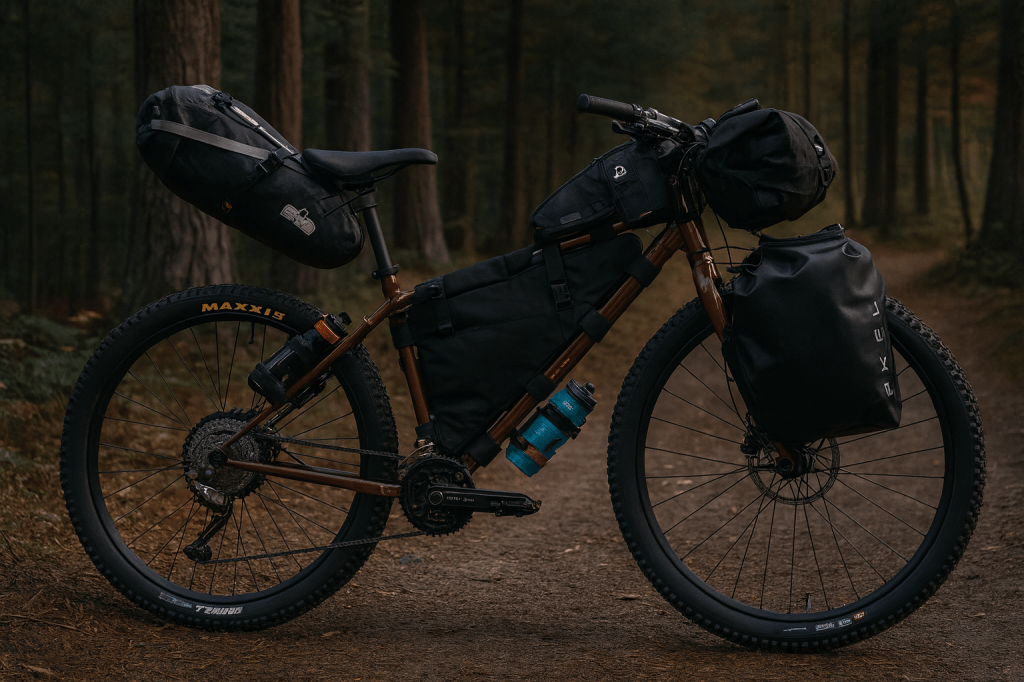
Bikepacking is the combination of cycling and backpacking, but instead of racks and panniers like traditional touring, you use frame bags, handlebar rolls, and seat packs. This setup keeps your bike agile enough for singletrack and gravel trails while still carrying the essentials for overnight or multi-day adventures.
Think of it as ultralight camping on two wheels—where the joy comes from traveling self-sufficiently through remote landscapes.
Bikepacking Gear: What You Really Need
Now after Bikepacking for a couple of years, my gear list seems to have expanded more than I thought. After some careful thought and experimentation, these are my go-to items that make my stay along the trail enjoyable and comfortable.
Core Bikepacking Bags
- Frame bag — A frame bag keeps your heaviest gear centered and stable. [Check out recommended frame bags here.]
- Handlebar roll — Perfect for bulky but light items like tents and sleeping pads. [See top-rated handlebar rolls.]
- Seat pack — These tail bags carry clothes and sleeping gear without racks. [Browse durable seat packs here.]
- Top tube bag (snacks and quick access) — Snack while you ride with easy-access storage. [Find compact top tube bags here.]
Sleeping System
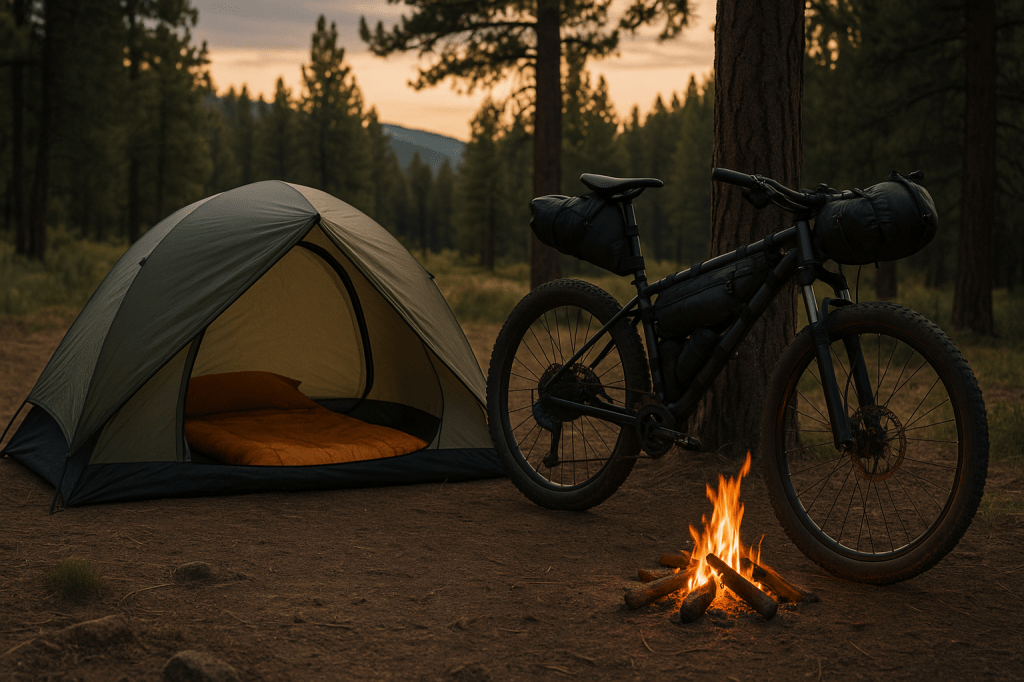
- Lightweight tent or bivvy — Go light without losing shelter comfort. [Explore lightweight tents and bivvies here.]
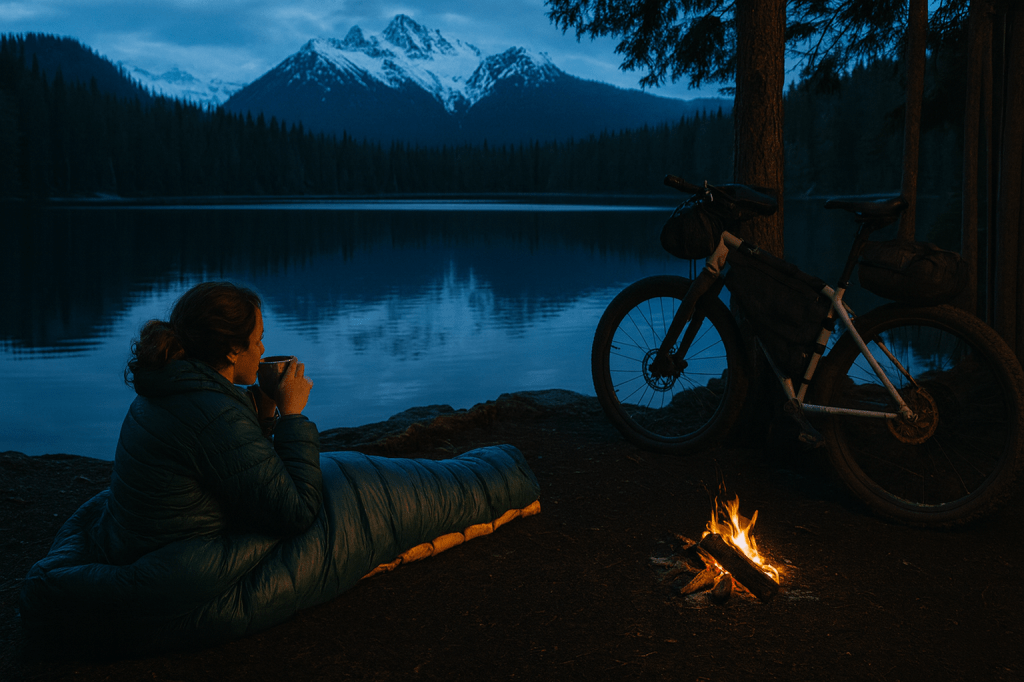
- Sleeping bag (3-season down or synthetic) — Stay warm without bulk. [Shop 3-season bikepacking sleeping bags.]
- Sleeping pad (compact inflatable) — Comfort matters after long miles. [Compare compact sleeping pads here.]
Cooking & Food
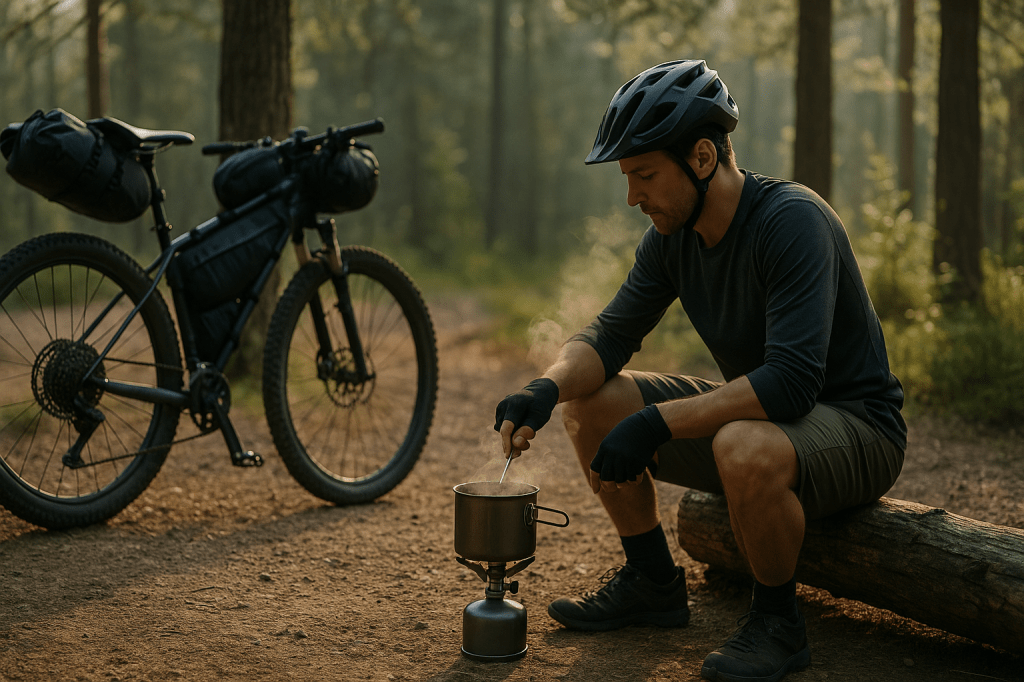
- Compact stove + fuel — Hot meals in minutes, even off-grid. [See popular bikepacking stoves here.]
- Titanium pot/mug combo — Cook, eat, and pack light. [Find titanium cook sets here.]
- Dehydrated meals & trail snacks — Fuel your ride with lightweight calories. [Browse easy trail-ready meals here.]
Bikepacking Essentials
Bike lights & power bank — Ride longer and keep devices charged. [See rechargeable bike lights here.]
Multi-tool + spare parts (tubes, patches, chain link) — Be ready for trailside fixes. [Shop reliable multi-tools here.]
Water filter or purification tablets — Never run out of safe water. [Check bikepacking water filters here.]
How to Pack for Bikepacking
- Heaviest items in the frame bag: water, tools, stove.
- Light but bulky gear in the handlebar roll: tent, sleeping pad.
- Seat pack: clothes and sleeping bag.
- Top tube bag: snacks, phone, GPS.
Pro tip: Keep frequently used items in easy-to-reach spots. You’ll thank yourself when you’re hungry on the trail or need to grab a jacket without unpacking everything.
Planning Your Bikepacking Adventure
Safety — Always tell someone your route or share GPS tracking.
Start small — A one-night loop is the best introduction.
Know your terrain — Gravel vs singletrack vs mixed routes.
Water sources — Plan refill points and carry a filter.
Weather check — Lightweight gear only works if you plan for conditions.
Best Bikepacking Routes for Beginners
Forest service roads — Low traffic, plenty of camp spots.
Local overnight loops — Start with trails you already ride.
Rail trails & gravel paths — Smooth terrain lets you focus on gear.
Top 5 U.S. Bikepacking Routes
1. Colorado Trail (CO)
Stretching 485 miles from Denver to Durango, the Colorado Trail is the crown jewel of U.S. bikepacking. Expect high-altitude passes, alpine meadows, and rugged singletrack. Best tackled in summer with solid planning.
2. Oregon Timber Trail (OR)
A 670-mile adventure through Oregon’s forests and high desert. Broken into four sections, it’s perfect for both shorter bikepacking trips and full thru-rides.
3. Arizona Trail (AZ)
For desert lovers, this 750-mile route offers cacti, canyons, and plenty of solitude. Expect challenging rocky terrain and extreme weather swings—carry extra water.
4. Great Divide Mountain Bike Route (GDMBR)
The ultimate long-distance bikepacking route. Over 2,700 miles from Canada to Mexico, mostly on dirt roads and jeep tracks. Iconic for anyone serious about bikepacking.
5. Vermont Super 8 (VT)
A challenging 640-mile loop across Vermont’s rugged terrain. Rooty trails, steep climbs, and classic New England scenery make this a great East Coast bikepacking adventure.
Best Bikepacking Loops in Europe
1. Tuscany Trail (Italy)
Europe’s largest bikepacking event route, covering 500 km of rolling hills, vineyards, and historic villages. Perfect for a mix of culture and gravel.
2. Highland Trail 550 (Scotland)
Scotland’s toughest loop: remote, wild, and beautiful. Expect bogs, mountains, and serious weather. A true test of bikepacking endurance.
3. The Ardennes Loop (Belgium)
A shorter 3–4 day bikepacking loop through Belgium’s famous Ardennes region. Forests, rivers, and punchy climbs with great camping spots.
4. Camino del Cid (Spain)
Over 1,000 km tracing the route of El Cid, offering medieval castles, Spanish villages, and mixed gravel terrain. Fantastic for spring and autumn bikepacking.
5. Trans Germany Trail (Germany)
A 1,600 km north-to-south bikepacking traverse through forests, mountains, and historic towns. A must for long-distance riders in Europe.

Bikepacking FAQs
What is bikepacking vs bike touring?
Bikepacking uses frame, bar, and seat bags instead of panniers, allowing you to tackle trails, singletrack, and gravel more easily. Touring is usually road-focused with racks and panniers.
How many miles can you ride in a day bikepacking?
Most riders cover 30–60 miles per day depending on terrain, gear load, and fitness. Rugged singletrack means fewer miles, while gravel roads allow more.
Do I need a special bike for bikepacking?
Not necessarily. Any mountain bike or gravel bike can work, as long as you can attach bags securely and it’s geared for climbs with weight.
What do you eat while bikepacking?
Lightweight meals like dehydrated food, oatmeal, and pasta, plus trail snacks. A small stove or cold-soak jar works for cooking.
Where can you camp while bikepacking?
National forests, wild camping areas, and designated campgrounds are common. Always follow Leave No Trace principles.
How heavy should my bikepacking setup be?
Aim for 25–40 pounds (11–18 kg) including gear, food, and water. The lighter, the better, but balance comfort with minimalism.
Bagging the Adventure
Bikepacking is one of those pursuits that rewards curiosity and patience. You don’t need the lightest gear, the newest bike, or a perfectly planned route to get started. What you need is the willingness to ride a little farther, carry what you need, and spend the night under the stars. Every trip will teach you something new—whether it’s how to pack smarter, how to handle trails with a loaded bike, or simply how much you can enjoy slowing down.
For me, bikepacking has blurred the line between cycling and camping in the best possible way. It’s taught me to value simplicity: a hot coffee made on a tiny stove in the morning, a quiet fire after a long day of pedaling, and the satisfaction of knowing everything I need is strapped to my frame, bars, and seatpost. It’s this minimalism that makes bikepacking feel so liberating.
If you’ve been thinking about giving bikepacking a try, the best advice I can give is: just go. Start with a short overnight, use the gear you already own, and see what works for you. Bikepacking isn’t about perfection—it’s about the ride, the adventure, and the story you bring back. Pack your bike, pick a trail, and start your own bikepacking journey today.
 My Mountain Bike
Leave a comment