
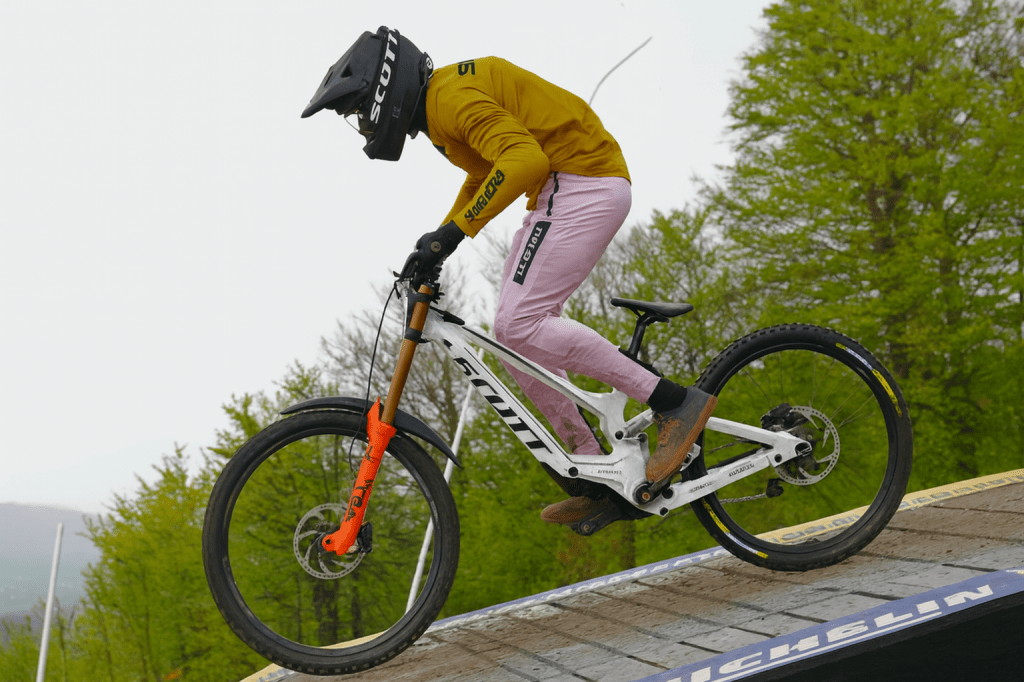

Scott Gambler-The Crown Jewel that Shines
Is the 2026 Scott Gambler a “Good” Bike? I would have say a very loud YES, YES, YES! The Gambler has long been Scott’s downhill flagship, and the 2026 model shows just how far they’re willing to push design. I had the chance to spend time on this bike in the French Alps, from wide-open bike park laps to tight rooty chutes. The takeaway? This is a downhill rig that mixes World Cup speed with real playfulness, something you don’t often find in a 200 mm travel machine. If you are planning on riding this beast, make sure to gear up with a Scott Helmet and Scott MTB Shoes to complete your Downhill look.
Geometry & Adjustability
The first thing that stands out is fit. At my height (193 cm), the XL frame with a 501 mm reach felt balanced — roomy enough to stay comfortable through big hits without making the bike feel like a bus. The chainstays in the longer position gave a bit more stability, but the bike still flicked side to side quickly.
Where the Gambler really separates itself is in the adjustment range. Scott lets you alter nearly every key dimension: chainstay length, bottom bracket height, reach via headset cups, suspension progression, and even wheel size (full 29 or mixed mullet). In practice, this gives you more than thirty different ways to configure the bike. For my rides, I started with Scott’s baseline: mullet setup, long chainstay, higher BB, and extended reach. That combination gave me a bike that felt lively in turns yet settled on fast straights.
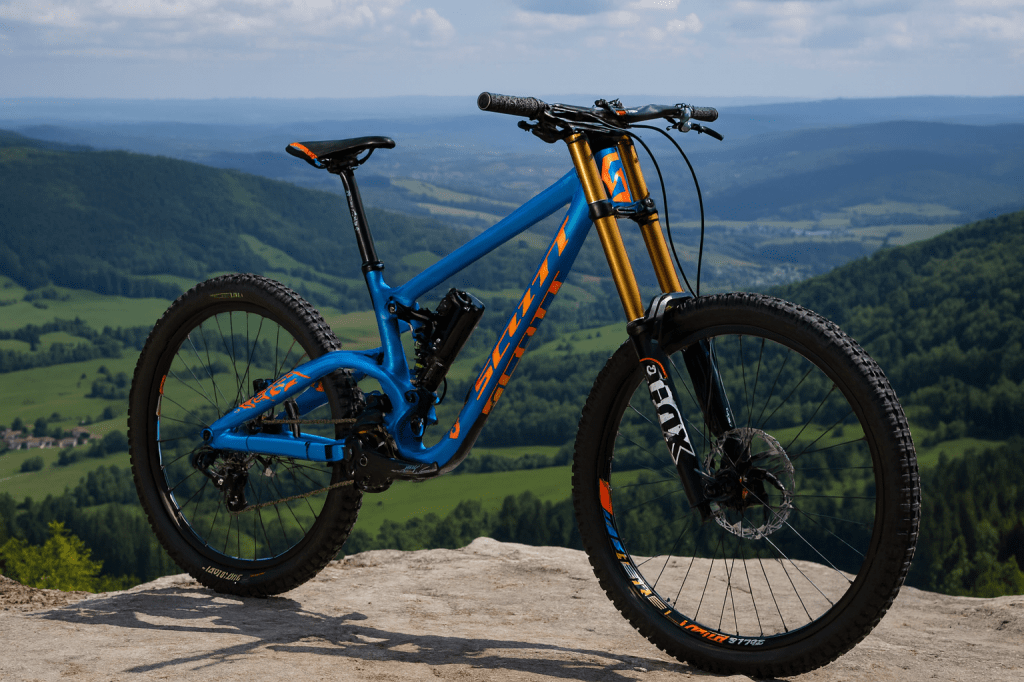
Suspension Design & Ride Feel
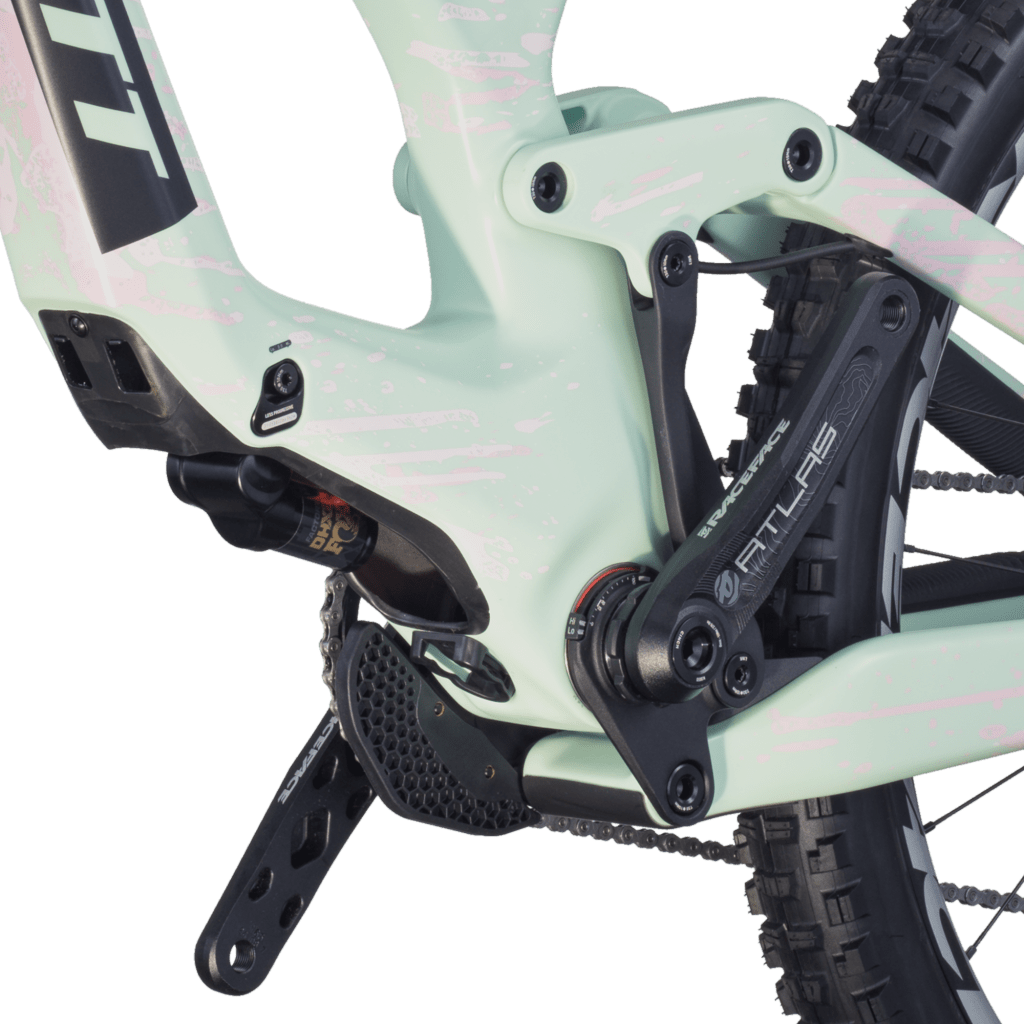
Scott’s most talked-about feature here is the hidden shock. Borrowed from their Bold Cycles influence, the coil shock is tucked inside the frame behind a cover, driven by a six-bar linkage that serves up around 210 mm of travel. While it looks futuristic, it’s not just for show — an external sag indicator makes setup easy, and little touches like captive washers and a built-in mini-tool show they thought about real-world maintenance.
On trail, the suspension feel is impressive. On flow lines and jump trails, the Gambler feels plush and tracks the ground incredibly well. It takes the sting out of braking bumps and makes big landings feel bottomless. At the same time, it isn’t so soft that you feel disconnected — I could still change lines or pop off little roots without the bike swallowing all my input.
Once I dropped into super-steep technical tracks, the stock tune revealed itself as a bit too soft and quick-rebounding. The fork dove on heavy braking, and the rear felt almost bouncy in consecutive hits. After adding some air up front, lowering the BB, firming up the shock progression, and slowing rebound, the bike completely transformed. Suddenly the front end held up in chutes, the rear stayed glued to the ground, and line choice felt easier. It traded a touch of buttery feel on smooth runs for far more confidence on the gnarly stuff — a worthwhile swap.
Even so, there were rare moments on ultra-steep rock drops where I wanted just a hair more wheelbase. The Gambler’s rear end, even in the longest setting, leans toward the shorter side compared to some competitors. That’s a deliberate choice: it makes the bike more agile through tight sections. It’s only in the most extreme terrain that I felt the limit. Switching to a full 29 setup added stability but also took away some of the mullet’s fun, so I switched back.
Component Build
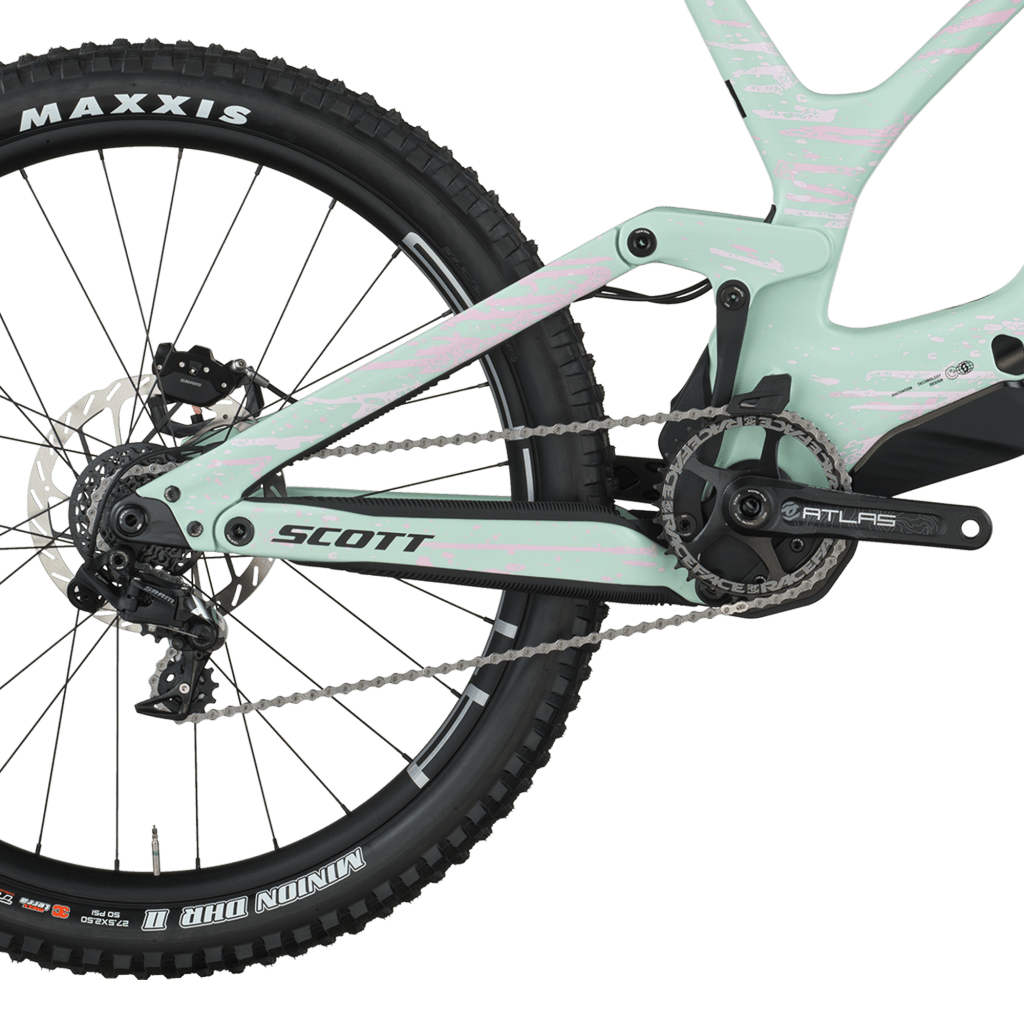
The Gambler RC build I rode is as premium as downhill bikes get: Fox 40 Factory fork up front, DHX2 coil out back, SRAM’s new Maven brakes, and a 7-speed DH drivetrain. The suspension, once dialed, delivered tons of support with bottomless travel. The brakes are almost startlingly powerful — one finger is plenty — though they take a little time to get used to. At just under 17 kg for the top model, the bike feels light for the category, helping it stay quick and responsive.
The more affordable Gambler 10 build uses RockShox suspension and Shimano brakes, but the frame is identical, so the ride character remains the same. Both models use a 157 mm Super Boost rear hub, which adds stiffness but does limit wheel compatibility somewhat.
Trail Impressions
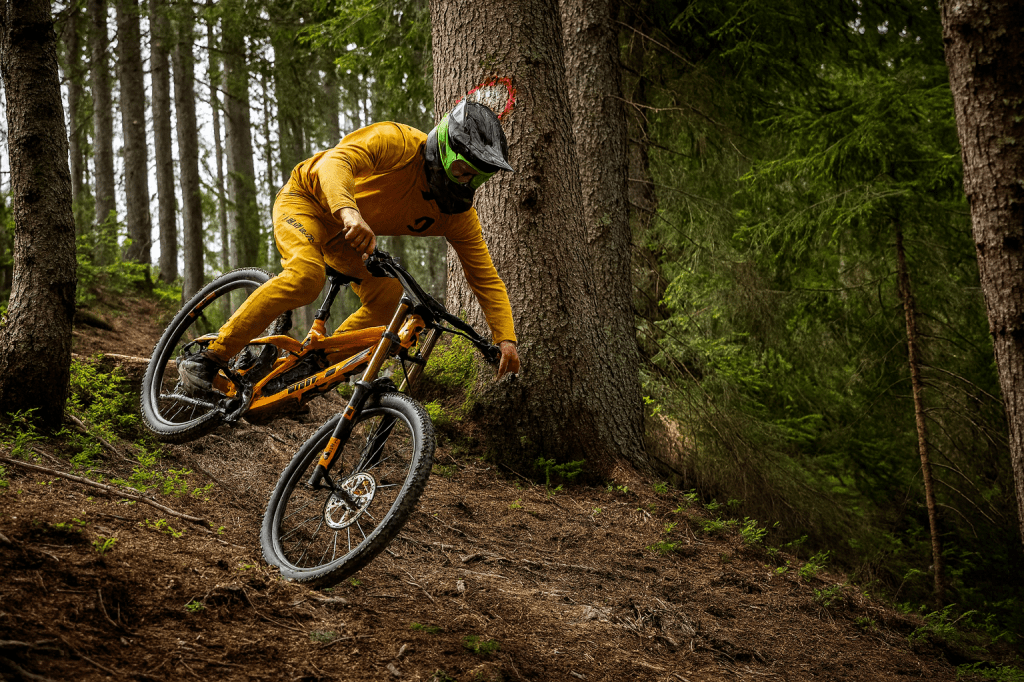
On fast flow trails, the Gambler feels like it’s on rails. It carries speed smoothly through berms, stays quiet with very little rattle, and encourages you to go bigger off jumps. On steep, technical lines, once tuned, it holds composure, grips well on off-camber roots, and feels supportive under braking. The bike finds a sweet spot between being planted and being playful, making it versatile enough for park riders and racers alike.
Strengths
- Excellent balance of stability and agility
- Huge range of geometry and suspension adjustments
- Predictable, supportive suspension once tuned
- Lightweight for a DH bike, easy to move around
- Smart details for mechanics: sag meter, built-in tool, captive hardware
Weaknesses
- 157 mm hub spacing reduces wheelset options
- Out-of-the-box tune may feel too soft for steepest terrain
- Adjustment options could overwhelm less experienced riders
- Shorter rear end means slightly less stability on the gnarliest tracks
Final Riding Thoughts
The Scott Gambler 2026 is the pinnacle of Scott’s downhill mountain bike range, combining advanced suspension engineering, a hidden-shock design, and unmatched adjustability. With its ability to switch between mullet and full 29er setups, fine-tune geometry, and customize suspension progression, the Gambler stands out as one of the most versatile and capable DH bikes available today. Once dialed, it delivers world-class stability on steep terrain while keeping enough agility for bike park jump lines. This Scott Gambler review 2026 proves that if you’re looking for a downhill bike that adapts to your riding style, the Gambler is one of the best DH bikes for racing and freeride riders alike.
Scott Gambler FAQ ❓
Q: Is the Scott Gambler suitable for beginner downhill riders?
A: The Scott Gambler 2026 is primarily designed as a race-ready downhill mountain bike, but beginners who want to progress on steep terrain or ride bike parks will also appreciate its forgiving suspension. Its extensive adjustability means you can make the bike more stable and confidence-inspiring as you grow your skills.
Q: Can I run the Scott Gambler as a mullet or a full 29er?
A: Yes. The Gambler is one of the few downhill bikes that is fully compatible with both a mullet setup (29” front / 27.5” rear) and a full 29” configuration. Scott ships the bike in mullet form, but riders who want maximum rollover and race-level stability often prefer dual 29s.
Q: How heavy is the Scott Gambler?
A: The Scott Gambler RC build 2026 weighs about 16.8 kg (37 lbs) in a Medium size, making it one of the lighter downhill mountain bikes in its class. The Gambler 10 build is slightly heavier due to different suspension and brake components but uses the same carbon frame.
Q: What makes the Scott Gambler different from other downhill bikes?
A: The Gambler sets itself apart with its Fox 40 suspension, hidden rear shock, and an industry-leading range of geometry adjustments. Riders can fine-tune chainstay length, reach, bottom bracket height, and suspension progression — making it a bike that works equally well for World Cup racers and aggressive park riders.
Q: Is the Scott Gambler easy to maintain even with the shock hidden inside the frame?
A: Yes. Despite the sleek design, Scott engineered the Gambler downhill bike with practical features like an external sag indicator, guided cable routing, and a built-in mini tool. This makes suspension checks and maintenance straightforward, even for privateer racers without a full pit crew.
 My Mountain Bike
Leave a comment