

Best Mountain Bike Frame Material: Steel, Aluminum, Carbon, or Titanium?

Choosing the Right Frame Material for Your Ride
The frame is the heart of any mountain bike, dictating how it feels on the trail, how much it weighs, and how well it withstands the demands of off-road riding. Whether you’re a weekend warrior, an aggressive downhill racer, or a backcountry explorer, the material of your frame plays a crucial role in performance and comfort.
Mountain bike frames are commonly made from four materials: Steel, Aluminum, Carbon Fiber, and Titanium. Each has its own strengths, drawbacks, and ideal use cases. In this guide, we’ll break down these materials to help you determine which one is best for your riding style. As always, make sure to wear the right Safety gear, Trail gear, and Outerwear to stay protected on every ride. Ride smart, ride safe, and see you on the trails!
Steel: The Classic Workhorse
Steel has been used in bicycle frame construction for over a century and is known for its strength, durability, and smooth ride quality. Most modern steel mountain bikes use Chromoly (Chromium-Molybdenum) steel, which offers higher strength and lower weight than traditional high-tensile steel.
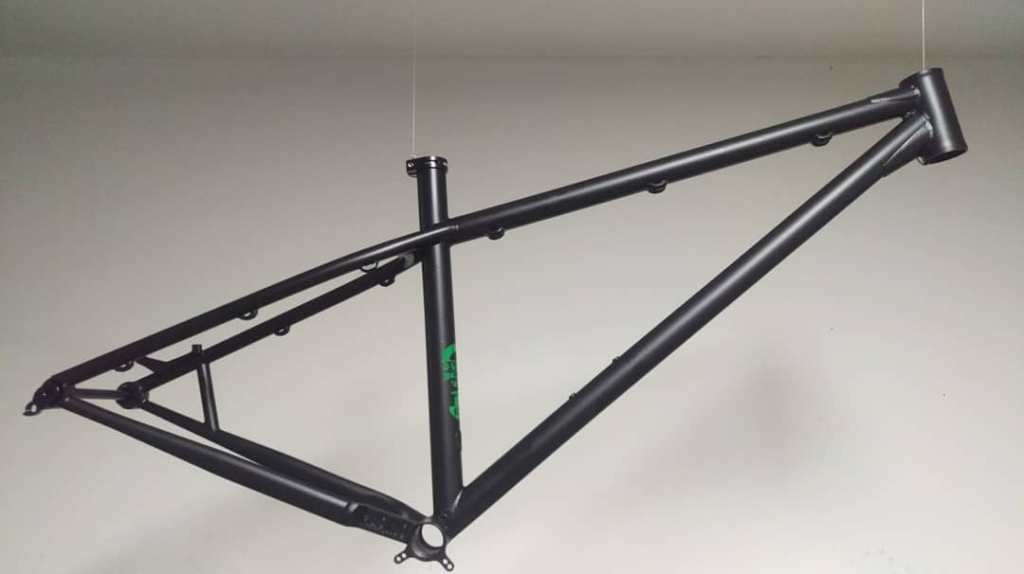
Steel is an alloy, meaning it’s made by combining iron with other elements (like chromium, molybdenum, and manganese) to improve its strength, rust resistance, and performance. While it is one of the heaviest frame materials, it remains a popular choice among riders who prioritize comfort, resilience, and longevity.
Unlike aluminum and carbon, steel has an inherent flexibility that helps absorb trail vibrations. This makes it an ideal choice for riders tackling rough terrain, where a supple ride feel is preferred over extreme stiffness. Many bike manufacturers and custom frame builders still favor steel because of its customizability and timeless ride characteristics.
Send It
✅ Smooth, comfortable ride – Steel’s natural compliance absorbs trail chatter and vibrations.
✅ Durable and long-lasting – With proper care, a steel frame can last for decades.
✅ Easily repairable – Unlike carbon or aluminum, steel frames can be welded if damaged.
✅ Custom-friendly – Many boutique builders offer handcrafted steel frames with custom geometry.
✅ Affordable compared to high-end materials – Good balance of cost and quality.
A Little Sketchy
❌ Heavier than aluminum, carbon, or titanium – Not ideal for weight-conscious riders.
❌ Rust-prone if not maintained – Needs proper care in wet or humid environments.
❌ Less stiff and responsive – Can feel slower and less efficient compared to stiffer materials.
❌ Not as common as aluminum or carbon – Fewer options from major manufacturers.
Ride Characteristics
Steel has a reputation for providing a smooth, compliant, and forgiving ride. Unlike aluminum, which tends to feel stiff and transmit trail chatter directly to the rider, steel’s natural flex and dampening properties help absorb small bumps and vibrations.
This makes steel an excellent choice for long rides on rugged trails, bikepacking, or aggressive hardtail riders who want a more comfortable ride without relying on rear suspension. Steel’s ability to take the edge off rough terrain means you can ride longer without feeling as fatigued compared to stiffer frame materials.
Steel bikes also tend to have a planted and predictable feel on the trail. They excel in technical terrain, where their compliance helps maintain traction over roots, rocks, and uneven surfaces. While they might not be as snappy as carbon fiber when sprinting, their stability and comfort make them a favorite for riders who appreciate a classic, confidence-inspiring ride quality.
Best suited for: Riders who prioritize comfort, durability, and a connected feel to the trail over raw speed. Great for hardtail enthusiasts, bikepackers, and those who love a more traditional mountain biking experience.
Durability and Maintenance
One of steel’s greatest strengths is longevity. It can withstand hard impacts and is relatively easy to repair. However, rust is a concern, so proper care is necessary, especially in wet or humid climates.
Weight Considerations
Steel is heavier than aluminum, carbon fiber, and titanium, which can be a downside for weight-conscious riders. While modern steel frames have become lighter, they’re still not the top choice for riders looking to shave grams.
Cost
Steel frames are generally affordable, making them a great choice for riders who want a high-quality bike without spending a fortune. Entry-level steel mountain bikes typically start around $800 to $1,500, while mid-range options with better components and craftsmanship range from $1,500 to $3,000.
Custom-built or boutique steel frames, often handcrafted by small manufacturers, can reach $3,500 to $6,000+, depending on the level of customization, tubing quality, and craftsmanship. However, steel’s longevity and repairability can make it a great long-term investment, as a well-maintained steel frame can last decades.
Price Range: $800 – $6,000+
Best Value: Riders looking for a durable, comfortable, and long-lasting frame at a reasonable cost.
Best For: Riders who prioritize comfort, durability, and a classic feel over ultralight weight.
Aluminum: The Lightweight Contender
Aluminum is one of the most widely used materials in mountain bike frame manufacturing today. It is lighter than steel, resistant to corrosion, and relatively inexpensive to produce, making it a favorite among both budget-conscious and high-performance riders.
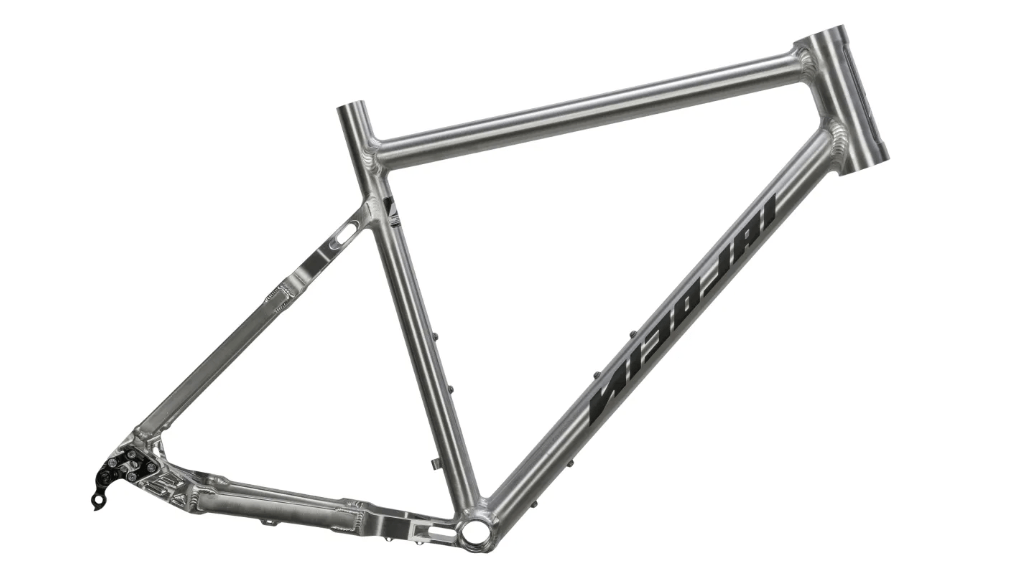
Most mountain bike frames use either 6061 or 7005 aluminum alloys, each with slightly different properties:
- 6061 Aluminum – More common, offers a great balance of strength, weight, and corrosion resistance.
- 7005 Aluminum – Generally stronger but slightly heavier and more fatigue-prone.
Aluminum frames are stiff, meaning they transfer power efficiently when pedaling but can feel harsher on rough terrain compared to steel or carbon fiber. Since aluminum is not as strong as steel per volume, bike manufacturers compensate by using larger tube diameters and hydroforming techniques to create lightweight yet strong frames.
While aluminum is generally affordable, high-end versions (such as those used in race bikes) can be quite advanced, with triple-butted tubing and internal reinforcement to reduce weight and increase durability.
Send It
✅ Lightweight and stiff – Great for efficient power transfer and fast climbs.
✅ Affordable – Offers excellent performance at a lower price compared to carbon or titanium.
✅ Rust-proof – Won’t corrode like steel, making it a great choice for wet conditions.
✅ Widely available – Most brands offer aluminum models, providing plenty of choices.
✅ Strong and durable – Can handle rough terrain and aggressive riding.
A Little Sketchy
❌ Harsher ride feel – Stiffness can lead to more trail chatter and rider fatigue.
❌ Fatigue over time – Aluminum frames can weaken and develop cracks with extended use.
❌ Less premium feel – Lacks the unique ride characteristics of steel, carbon, or titanium.
❌ More difficult to repair – If an aluminum frame cracks, it’s usually not fixable.
Ride Characteristics
Aluminum bikes are known for being stiff, responsive, and efficient, making them great for riders who love quick accelerations, technical climbs, and an aggressive riding style. Because aluminum is naturally rigid, it transfers power directly from your pedals to the ground with minimal energy loss—this means faster acceleration and more efficient climbing.
However, that stiffness comes at a cost. Aluminum frames don’t absorb vibrations as well as steel or titanium, so they can feel harsher on long, rough descents. This is why full-suspension aluminum bikes are much more common than aluminum hardtails—rear suspension helps offset aluminum’s stiffness, making the ride more forgiving on demanding trails.
Despite this, modern aluminum frames have improved significantly with advanced hydroforming, tubing shapes, and vibration-damping techniques that make them more comfortable than their predecessors. If you’re an aggressive rider who values efficiency and a lightweight build, aluminum provides a fast, precise, and budget-friendly option.
Best suited for: Trail and enduro riders who prioritize speed, efficiency, and a responsive ride over long-distance comfort. A great choice for riders who like pushing hard on technical climbs and fast descents but don’t mind a slightly firmer ride.
Durability and Maintenance
Aluminum is rust-proof, making it an excellent choice for wet climates. However, it can be more prone to fatigue over time, and cracks are harder to repair than steel.
Weight Considerations
Aluminum is significantly lighter than steel, making it a great option for riders who want a mix of durability and weight savings.
Cost
Aluminum is one of the most affordable and widely available mountain bike frame materials, making it the go-to choice for budget-conscious riders. A solid entry-level aluminum hardtail can be found for around $600 to $1,500, while full-suspension aluminum bikes typically start at $1,500 and go up to $4,000 for more advanced models.
Higher-end aluminum bikes, featuring advanced hydroformed tubing, lightweight designs, and premium components, can range between $4,000 and $6,500, but at this price point, many riders may consider carbon fiber instead.
Because aluminum frames are mass-produced and relatively inexpensive to manufacture, they offer excellent performance at a fraction of the cost of carbon or titanium.
Price Range: $600 – $6,500
Best Value: Riders looking for a lightweight and efficient bike without breaking the bank.
Best For: Riders looking for a lightweight, affordable, and durable bike with good power transfer.
Carbon Fiber: The High-Performance Choice
One of the biggest advantages of carbon fiber is that its characteristics can be tuned during manufacturing. Engineers can make some areas stiff for power transfer (like the bottom bracket and head tube) while keeping others flexible for compliance and comfort (such as the seat stays). This allows for a more controlled and efficient ride compared to metal frames.
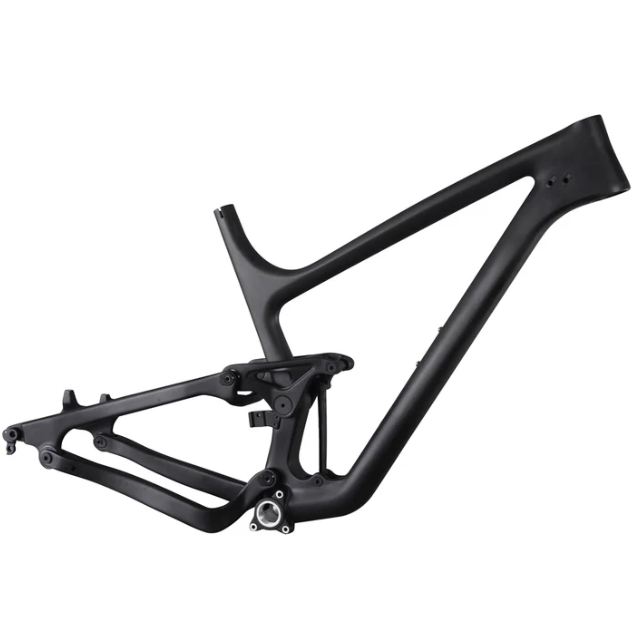
High-end carbon frames often use high-modulus carbon fiber, which offers an even better strength-to-weight ratio. However, while carbon fiber is highly resistant to fatigue and corrosion, it can be brittle under impact, meaning a bad crash could crack or damage the frame beyond repair.
Carbon fiber is often the go-to choice for racing and high-performance mountain biking due to its ultralight weight and tunability. However, the manufacturing process is complex, which is why carbon frames are significantly more expensive than steel or aluminum options.
Send It
✅ Ultralight and strong – The best weight-to-strength ratio of any frame material.
✅ Tunable ride characteristics – Can be designed for stiffness in some areas and compliance in others.
✅ Smooth and efficient – Damps vibrations better than aluminum for a more comfortable ride.
✅ Incredibly stiff for power transfer – Provides a snappy, responsive feel for aggressive riding.
✅ High-performance choice – Favored by racers and competitive riders.
A Little Sketchy
❌ Expensive – Carbon frames cost significantly more than aluminum or steel.
❌ Fragile under impact – While strong under normal use, a hard crash can crack or break carbon.
❌ Difficult to repair – While some carbon frames can be fixed, repairs are costly and not always possible.
❌ Not always worth the extra cost – Unless weight savings and stiffness are a priority, aluminum may offer better value.
Ride Characteristics
Carbon fiber is the holy grail of mountain bike performance, and for good reason. Unlike metal frames, which have fixed stiffness and compliance, carbon fiber frames can be tuned by engineers to balance power transfer, compliance, and handling in a way that no other material can.
What does this mean on the trail? A carbon frame can be stiff where you need efficiency (like the bottom bracket and head tube) while remaining compliant in areas that need flex (like the seat stays and top tube). The result is a bike that feels snappy, responsive, and incredibly efficient, yet still offers a level of comfort that aluminum struggles to match.
Carbon fiber’s lightweight nature means faster climbs, effortless handling, and reduced rider fatigue on long rides. The downside? It can be less forgiving in crashes. While carbon fiber is strong under normal riding conditions, it doesn’t handle sharp impacts (like a rock strike or a bad crash) as well as metal frames.
Still, for riders who demand the best performance, carbon fiber delivers unparalleled ride quality. It’s the go-to choice for racers, competitive riders, and those who want the lightest and most precise bike possible.
Best suited for: Riders who want the lightest, most efficient, and tunable ride quality. A perfect choice for racing, aggressive trail riding, and those who demand high performance on every ride.
Durability and Maintenance
While carbon doesn’t rust or fatigue like metal, it is more susceptible to cracking from sharp impacts. If a carbon frame is damaged, repairs are often expensive or even impossible.
Weight Considerations
Carbon fiber is the lightest frame material available, making it the top choice for racers and riders who prioritize weight savings.
Cost
Carbon fiber is the most expensive mainstream mountain bike material, and for good reason. The complex manufacturing process, advanced engineering, and ability to fine-tune ride characteristics make it a premium option.
Entry-level carbon mountain bikes start at $2,500 to $4,000, while mid-range models with upgraded components and suspension technology typically range from $4,000 to $7,500.
For high-end, race-ready builds or premium boutique carbon frames, expect to pay $8,000 to $12,000+—sometimes even exceeding $15,000 for top-tier models with the latest tech. While carbon fiber is lightweight and high-performance, it’s a significant investment, and repair costs for damaged frames can be high.
Price Range: $2,500 – $12,000+
Best Value: Riders who demand the lightest and most performance-oriented ride and are willing to pay a premium.
Best For: Riders who want the lightest, most performance-oriented bike and are willing to pay a premium.
Titanium: The Luxury All-Rounder
Titanium is an ultra-strong, corrosion-resistant metal that sits at the high end of mountain bike frame materials. It offers a perfect balance of durability, weight savings, and ride comfort, making it an attractive choice for riders looking for a lifetime bike.
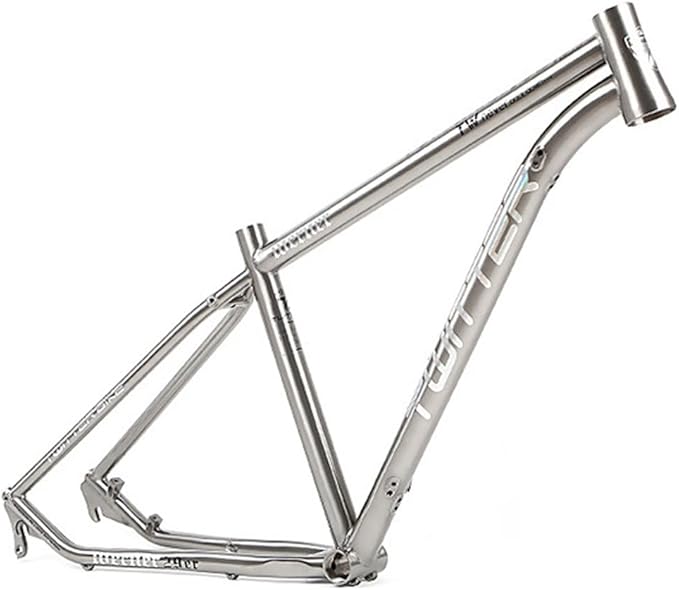
Titanium is known for its exceptional strength-to-weight ratio, meaning it can be as strong as steel but much lighter. The material is naturally resistant to rust and fatigue, meaning a titanium frame can last decades without degradation. Unlike aluminum, which can develop stress fractures over time, or carbon fiber, which is prone to cracking under impact, titanium is incredibly resilient and can withstand serious abuse.
One of the defining traits of titanium frames is their smooth and comfortable ride quality. Titanium has an inherent ability to absorb trail chatter much like steel, making it ideal for long rides and rough terrain. However, due to the difficult manufacturing process and expensive raw material costs, titanium frames tend to be very expensive—sometimes even more than carbon fiber.
Despite the cost, many riders see titanium as a long-term investment, as the frames are often handmade, highly customizable, and virtually indestructible.
Send It
✅ Exceptional durability – Won’t rust, corrode, or fatigue over time.
✅ Smooth, comfortable ride – Natural compliance similar to steel, but lighter.
✅ Lightweight but strong – Almost as light as aluminum but more resilient.
✅ Timeless investment – A well-built titanium frame can last a lifetime.
✅ Unique, premium feel – Rides like a dream and stands out from the crowd.
A Little Sketchy
❌ Very expensive – Titanium frames often cost as much or more than carbon fiber.
❌ Harder to find – Fewer options compared to aluminum or carbon frames.
❌ More difficult to work with – Repairs and modifications require specialized welding.
❌ Not as stiff as carbon – While it’s strong, titanium doesn’t offer the same ultra-responsive feel as carbon fiber.
Ride Characteristics
Titanium frames are often described as having the best of both worlds—combining the compliance of steel with the lightweight benefits of aluminum. The result is a silky-smooth, vibration-dampened ride that feels incredibly comfortable over long distances.
Unlike aluminum, which can feel harsh, or carbon fiber, which is tuned for performance, titanium has an inherent ability to absorb trail chatter, making it an exceptional choice for endurance riders and backcountry explorers. It’s the kind of bike that feels supple and forgiving on rough terrain while still maintaining efficiency on climbs.
Another advantage of titanium is its durability. It doesn’t rust, doesn’t fatigue, and won’t crack like carbon. This makes it ideal for riders who want a bike that will last a lifetime, especially those who ride in harsh conditions or love bikepacking adventures.
While titanium bikes can be expensive, their longevity and superior ride quality make them a worthwhile investment for riders who appreciate both performance and comfort.
Best suited for: Riders looking for a premium, all-day comfortable ride that can handle anything from cross-country epics to rugged backcountry trails. Perfect for those who value durability, longevity, and a smooth ride feel over extreme stiffness or ultralight weight.
Durability and Maintenance
Titanium is extremely durable and corrosion-resistant, meaning it doesn’t rust like steel and doesn’t fatigue like aluminum. A well-maintained titanium frame can last a lifetime.
Weight Considerations
Titanium is lighter than steel but slightly heavier than aluminum and carbon fiber. Its weight-to-strength ratio is excellent, making it a great all-around performer.
Cost
Titanium is a high-end, luxury material, and its price reflects both its durability and the difficulty of working with it. Entry-level titanium frames alone can cost $2,500 to $4,000, with complete bikes typically starting around $4,000 to $6,500.
Mid-range titanium mountain bikes, often featuring custom geometry and high-end components, range from $6,500 to $9,000. High-end, handcrafted titanium frames from boutique builders can push well beyond $10,000 – $12,000+, making them one of the most expensive options available.
While titanium comes with a premium price tag, its durability and corrosion resistance mean that it could be the last bike frame you ever need. Riders who invest in titanium often do so knowing it will last a lifetime.
Price Range: $4,000 – $12,000+
Best Value: Riders who want a bike that offers premium ride quality, durability, and longevity, making it a long-term investment.
Best For: Riders who want a high-performance, long-lasting, and comfortable frame without worrying about corrosion or fatigue.
Comparison Chart: Mountain Bike Frame Materials
| Material | Ride Quality | Weight | Durability | Cost | Best For |
|---|---|---|---|---|---|
| Steel | Smooth & Compliant | Heavy | Highly Durable (Prone to Rust) | $$ | Comfort & Durability |
| Aluminum | Stiff & Efficient | Light | Good (Prone to Fatigue) | $ | Budget & Speed |
| Carbon | TunEable & Smooth | Very Light | Fragile (Prone to Cracking) | $$$$ | Racing & Weight Savings |
| Titanium | Supple & Comfortable | Moderate | Extremely Durable | $$$$ | Longevity & Premium Performance |
Final Thoughts: Which Frame Material is Right for You?
Choosing the right mountain bike frame material is more than just a technical decision—it’s about finding the right balance between performance, durability, comfort, and cost to match your riding style and goals. Each material has its own strengths and trade-offs, and the best choice depends on what matters most to you on the trails.
If you’re a budget-conscious rider looking for a solid, reliable frame that can take a beating, aluminum is the clear winner. It’s lightweight, stiff, and widely available across all price points. However, if you value comfort and durability over absolute weight savings, steel provides an unmatched smooth ride and can last for decades with proper care.
For those who demand the lightest and most high-performance option, carbon fiber is hard to beat. Its ability to be fine-tuned for stiffness, compliance, and responsiveness makes it the go-to choice for competitive riders and weight-conscious trail enthusiasts. However, its cost and susceptibility to impact damage mean that it’s not for everyone.
Then there’s titanium, the luxury choice. It blends the best of all worlds—offering durability, a comfortable ride, and corrosion resistance. If you’re willing to make a long-term investment in a frame that could last a lifetime, titanium is the ultimate all-rounder.
Ultimately, the best mountain bike frame material is the one that aligns with your riding needs, budget, and terrain preferences. Before making a decision, consider how you ride, where you ride, and what you want out of your bike.
Final Recommendations:
- For budget-friendly performance → Go with Aluminum
- For a smooth, compliant ride → Choose Steel
- For ultralight speed and performance → Opt for Carbon Fiber
- For a premium, long-lasting ride → Invest in Titanium
Regardless of the frame material you choose, one thing remains constant—mountain biking is all about the experience, the adventure, and the thrill of the ride. Whether you’re bombing down a rocky descent, climbing a grueling switchback, or just enjoying a day in the dirt, the right frame will help you push your limits and have fun along the way.
consider your terrain, riding goals, and how much maintenance you’re willing to do before making your decision.
 My Mountain Bike
Leave a comment